Tuesday, 23 March 2010

My First Egg!

Oh my goodness Nigella, our Catalana hen has laid her first egg today and it is simply beautiful.

I caught her earlier behaving very strange, I walked down the garden and they didn´t come running to me as they usually do so. At first I thought they were all down the garden together, until I spotted the other 2 girls, Henny Penny and Dehlia beside the shed digging in the dirt and collecting grass!

I began to get worried and I was thinking all sorts, such as a dog had gotten them or they had managed to get out, I even thought they could be in Mark's van, who was here today helping us with our roof.

As I was slowly starting to panic, Gordon Ramsay stuck his head out of the chicken house - I was then even more confused as this is the most unusual place for them to be inside their house at that time of day, which I think was around 4.30pm.

I went around the back of the house and lifted out one of the wooden doors, for easy access to the eggs - hahhaha harrrrr - now, before we get excited she had not laid her egg at this point but while I was being nosey I spotted she was nest making and then felt awful I had disturbed her so I carefully put the door back on and snuck away back to the house. I half expected Nigella to follow me as she always does when I am outside - thinking I have sweetcorn, in fact she probably looks at me and sees sweetcorn!

An hour later I went back down for a wander to find the chickens and again I could not find them. Fortunately they were further down the garden, where we have been showing them to go so I quickly looked in the house and there it was - THE GOLDEN EGG hehehe. I am so chuffed as the chickens have been with us 12 days - whoop whoop!

I started shouting for Chris and squealing with delight but as Chris was working he didn´t see me, only heard me so he jumped up because he thought I had fallen over or something! But there I was, grinning from ear to ear outside the front door with a warm egg in my hands - pure joy!

We look forward to more egg laying from here on in and I hope you enjoy the images :)

Thursday, 18 March 2010

What Do Chickens Eat?

Well I think it is probably easier to tell you what chickens don’t eat. They should not have green potato peelings, banana skins, mouldy bread, citrus fruits, coffee filter waste or grass from the lawn mower. As you will see that means the list of what they do eat is quite extensive and believe me after 2 weeks of having chickens you will never look at left over food again in the same light.

At the end of every meal I now carefully divide the left-overs between the guinea pigs and the chickens. Left over cereal from breakfast, into the chicken food tupperware box, half eaten cookie that fell on the floor, into the chicken box, all vegetables, salad, bread, sauces, rice, cheese, fruit, cakes and their very favourite sweet corn ! I do not think twice now about getting on my hands and knees to pick up 3 grains of fallen sweet-corn from under the table instead of reaching for Mr Dyson the hoover as I see how much joy one single grain of corn can bring the chickens. When we go out to restaurants and cafes Keiana is never a big eater and now (much to the embarrassment of my husband I might add) I take a little bag with me and when she is full she declares’ the rest is for Maisy and her friends mummy’. When I look around at the left over food on other peoples’ plates I just pray that all restaurants have a flock of chickens outside as it breaks my heart to see so much food wasted.

As well as the fresh food they get access to grain each day, are allowed to eat the shrubs, insects, worms and grass in their run and also I give them the left over egg shells which they adore and are apparently are good to help them form harder shells on their own eggs. We place all this food on an extra large plate (actually the lid off our water collector) as it is best not to put it directly on the ground but believe me your children will not learn wonderful table manners by watching chickens eat.

They are straight away in there with there feet, clawing backwards and sifting through to find what they like best. We have since adopted another family of three chickens, this time white Chinese Silkies and little Snowy had a bright orange Mohican for 2 days after she dived right under my box when I was emptying some left over baked beans on to their plate– it did not seem to bother her, rather – good I’ll save that bit for later!
 
Author: Shelley O´Brien who lives in Belgium and has just joined our gardening forum for some great advice on chickens, pointer dogs and guinea pigs, she has kindly donated us some great content for the blog to help others with their wildlife :) Thanks Shelley, we appreciate your wonderful words of Chicken wisdom!

Monday, 15 March 2010

The Chickens Arrive in Monda!

We have been living in Monda now since 2007 and ever since we moved in we have both wanted chickens but you know what it is like when you move house, cash is tight, problems arise that must be fixed, mortgage has to be paid, business has to continue and the list keeps getting larger! Chickens just had to wait so we could afford the cash to have the coop build along with their house and me being me I wanted a nice house, not some crappy expensive box you buy in the shop, so we had our friend, who is an expert carpenter, build the coop and the house.

The whole project has taken 2 weeks, however, this is not all day, every day, but they do take some planning. We have had a lot of rain during these weeks so we have also had many "rain days" which stops work outside.

Needless to say the result is perfect, just what we wanted and also great for me. I have Scoliosis, which is a curvature of the spine. I had surgery 21 years ago but I still have problems with my lumbar spine so bending down to get into a chicken coop was always going to present me with issues, this is the reason we needed a coop so large to accommodate the height I needed it to be so I didn´t have to bend down to enter the chicken's coop. The house itself was also bespokely designed by my friend, Mark Murray, who took into consideration my Scoliosis, which is why the back of the chicken house is easily accessible for me. There are 3 back panels which easily come out so I can reach inside to clean the house and collect eggs - ingenious!

We have no idea what to do with chickens but we are slowly learning, and as each day goes by we will learn more. We did little research into which chickens we should buy and what their requirements are, we are looking forward to learning from our mistakes (providing they are not bad ones!), the house is secure and safe, we know what we should not feed them and also what treats they like.

We believe our chickens to be Catalana Hens and a Booted Bantam, but we may be informed otherwise in the not too distant future by a Spanish neighbour! LOL

Join our Gardening Forum and discuss your chickens with us and offer any tips you might have

I will now explain what we did, step by step to achieve our work of art for a chicken coop :)

Chicken Coop Building and Carpentry
Step 1
Design Your Layout: Where is the house going to go, what materials it is going to be made from, how big do you require it, do you need to stand in it like me or would it be OK lower and how much this is going to cost, remember you have to allow for labour costs, either hour or day rates. We chose a piece of land next to our shed so we could butt the chicken coop up to one side of the shed. This was for 3 reasons, the main one being shelter for the chickens, less wood to buy as we could use the shed wall as part of the coop and the third reason was to use a piece of land that was never going to be garden and put it to some good use!

Step 2
Preparation: Prepare the land where your chicken coop is going to be built, you will need to do some digging at this stage and lay out where the wood is going to go. We decided to include an Olive tree inside the coop, for no other reason than to make it look nice, so we had to do some contemplating on how that was going to work. We also wanted to provide a sheltered area for the winter months and of course shade for the hot months too. We had some old corrugated roof laying around the land so that was a good way to recycle that.

Step 3

Framework: Dig holes for your framework posts to nestle in to and then build your framework and the door.


Step 4

Chick House Construction: The house was a surprise, our carpenter made the house at home and then brought it round here in sections. I was told to stay in the shed while he put all the sections together to complete the house. I have been so excited about the chicken coop for a long time that I burst into tears when I saw it, the house is exactly as we wanted it and how I had imagined it was going to look.


Step 5
Wood Staining: Ensure you have at least 3 pots of stain, we used pine but you can choose whatever you like. We did not stain the inside of the chicken house for fear of them not liking the smell and then not laying eggs! We used 2 pots of stain on the chicken house. I say 3 because we are also planning on staining the framework itself, especially the door ends (as per instruction from our carpenter).


Step 6

Chicken Wire: Now the framework is built and the roof is on the section that you wish to keep dry, get the chicken wire on the go and start making it rat and fox proof! Wrap the chicken wire around your wooden posts carefully, we used U nails for fixing the chicken wire to our posts - fiddly little buggers that they are!


Step 7

Buying Chickens: The real exciting bit comes now but be prepared for the experience in Spain as you get your chickens in a bag, all in together! Being an animal lover I hated that, I know it is OK and they were and are fine but I would have preferred them in a cat box so if I go again I will take my own with me.


What You Will Need

Wood
Chicken Wire
Wood Stain
Corrugated Iron
Bitchumen
U Nails
Nails
ScrewsStraw
Feeders for water and food
Latches and hinges

Wood
10 of 240x4.5x4.5
2 of Plywood
20 of 2.50x4.5
Total: €196.00

Wood Stain
3 Tins of Stain (Pine)
Total: €40.80

Chicken Wire
2 metres of chicken wire
Total: €37.50

Latches, Hinges, Screws  €20 depending on what you choose of course

Chickens and Feeders
1 Booted Bantam
3 Catalana Hens
1 Feeder
1 Water Feeder
Chicken Food 40KG
Bail of shavings
Total: €83.50

Chickens also require perches for sleeping at night inside their houses so we used bits of wood that we have kicking around the land. We made one for their house and one for their coop as some fun for them. We are also planning on hanging CDs off this perch along with some balls for entertainment but we will share that when we have done it!

I have placed some images below of the chickens and other images I wanted to share

 Booted Bantam - Gordon Ramsay


Booted Bantam - Gordon Ramsay again, close up of his colours


Catalana Hens - this is Nigella


Our beautiful chicken house, where they sleep at night


The chicken coop itself so they have a run also

I have a photo album on Facebook if you want to see further photos Chicken Coop Building

Tuesday, 26 January 2010

Biosphere Reserve - White Villages Andalucia

The Sierra de las Nieves has been declared a "tourist destination" which includes the surrounding areas of:

Alozaina
Alozaina which means "small fortress", makes the boundary between the Malaga basin and the mountains. Rich in archaelogical remains, the area harmoniously combines its fields of olive trees, orchards and cereal crops with the majesty of the Sierra Prieta, whose peak stands at 1,525 metres high!

This mountain village, crammed with nooks and crannies of a markedly Muslim flavour, was the birthplace of Maria Sagredo, the local heroine who defended Alozaina, when the Moors attempted to capture it by hurling beehives at the locals, taking advantage of a moment when only its women, children and elderly were present.

The village, historically renowned as a healthy location, offers breathtaking views, good food, top-quality accommodation and a wealth of options for those in search of an active holiday.
Casarabonela
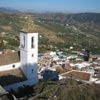
With its mixture of different cultures. Casarabonela is one of Malaga's best examples of a village that has managed to successfully combine its Muslim and Christian opast, largely conserving the original urban layout of the Arabic Casr-Bonaira.

Its steep, narrow streets are home to a myriad if blind alleys and rasied rooms under which the street itself passes. The thirsty traveller will appreciate the fountain and crystalline sorings to be found here.

Today, the village founded by the Romans as Castra Vinaria is a haven of peace and tranquility whose upper reaches afford views of an attractive carpet of fertile fields splashed with the brilliant white of the farmhouses. In Casarabonela, hills merge with streets, the river with the fountain, while in quiet corners, the echoes of fierce battles still ring aloud.

El Burgo
Surrounded by mountains crowned by evergreen oaks, Spanish fir and pine trees. El Burgo stands on a hilltop, defiant in the face of a history that has seen a wealth of different cultures jealously covet this strategic vantage point.

Home to family clans during the Copper Age, it was here that the Carthaganians later built what became known as Hannibal's Tower, while in Roman times it was a obligatory port of call for both men and merchandise alike before becoming the site of a border castle during the Arabic occupation.

The River Turon, which has its source in El Burgo and whose waters help cultivate the fields of olvie trees and cereals crops, flows through a privileged natural setting that the visitor will enjoy sampling along with the roch local cuisine and ancient traditions.

Guaro
The intense aroma of almond trees that bear pink and white blossom in spring signals to the traveller that he is approaching Guaro, an attractive village whose history dates from thhe Copper Age, testimony to its privileged location.

The coat of arms of the earldom of Guarom a mace held aloft by two arms, bears witness to the distinguished past of this locality, which was handed over to the catholic Monarchs following the capture of Coin in 1485. In 1614, it was awarded village status and designated the capital of an earldom of the same name by King Philip IV.

The waters of the River Grande, the symbol of the local economy, only serve to further embelish the picturesque natural setting that awaits the visitor to Guaro.
Istan
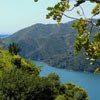
In Istan, the streets are dominated by the sound of water gushing out from among the stones, flowing in irrigation channels and sprining forth from fountains, before filling the reservoir that provides drinking water for the Costa del Sol.

Though the richness of the local terrain was already apparent as early as Roman Times, it was the arrival of the Muslims that ushered in the golden age of this village tucked away between the Sierra Real and Sierra Blanca ranges. Local raisins, wine and silk were exported to the whole of Europe, while the introduction of a major water channelling system still in use today turned the hillsides into orchards.

On the way to Istan, shortly after entering the Biosphere Reserve, the visitor will notice a sudden change in light. This is caused by a subtle blend of colours in which carob trees, pines and cork groves produce a series of shades of green that afre complemented by the clear, blue reflection of the Rio Verde reservoir. A spectacular slight to behold, and less than ten minutes from the village.
Monda
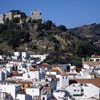
Halfway between the valley and the mountains, sheltered from the wind by a hill upon which Villeta Castle stands, Monda's immense beauty saw it officially declared a picturesque spot in 1971.

In this village of landscapes and legends, whose other official accolades include Historic Location and Place of Cultural Interest Status, valuable traces of ancient inhabitants, including an Iberian settlement, still abound.

Monda is also home to the most interesting remains of a Roman and Medieval road to be found in the whole of the Sierra de la Nieves region. This is situated some 700 metres from the village itself, on the road to Coin, and compromises three areas: the original Roman construction, a section repaired during Medieval times and a third, more recent stretch that features a series of low steps to accommodate carriages.


Ojen
Between the ranges of the Sierra Blanca and the Sierra Alpujata, in an area of great hydraulic riches, stands Ojen, a picturesque location flanked by mountauinsand sea, a village with a strong Andalusian flavour evident in the layout of its streets, its popular architecture and its abundant flowers.

Though Ojen´s numerous caves were home to settlers as long ago as Neolithic times, it was not until the X century that Islamic chronicles refer to a village whose castle, now destroyed, frequently changed hands in the wake of a series of uprisings, rebellions and conquests. It was subsequently repopulated by Old Christians from the Guadalquivir Valley.

As Ojen enjoys the advantages afforded by its proximityto both the cosmopolitan coast and the rural interior, it ofefrs a myriad of options to the visitor.
Tolox
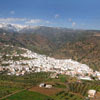
At the heart of the Sierra de las Nieves stands Tolox, an area of picturesque contrasts with its whitewashed houses and red mountains and home to the famous Torrecilla peak and GESM pothole.


Its origins date back to the Neolithic period, as witnessed by La Tinaja, the cave in which remains of decorated ceramic vessels were found. The village's turbulent history is evident in the few surviving traces of its heritage. Just a few references in street names enable us to reconstruct the layout of what was once the castle, the scene of Moorish rebellions and bloody conflicts between Christians and Muslims.
Yunquera
Home to the largest pine grove in the world, Yunquera owes its name to the large quantities of reeds or juncos that once stood here, which in turn bears witness to the abundance of water in the village.

Possibly of Roman origin, though no traces of this period remain today, this area of great beauty was home to Christian settlers before the arrival of Berber troops in the VII century.

Of the castle-fortress that once dominated this mountain landscape, only the tower now remains, rising majestically above Yunquera itself and affording views of its breathtaking natural setting.

Sunday, 24 January 2010

Sierra de la Nieves - Biosphere Reserve

The Sierra de la Nieves is surrounded by a belt of nine villages, all of which are bound by common characteristics and history that have served to create a region with a strong local identity within the province of Malaga.

Situated in strategic locations, much of their charm is derived from the architecture of their old village centres, which is based on the Arabic model. The visitor can best appreciate the villages by losing himself in their winding, maze like streets and admiring their whitewashed houses. The arrival of the Christians saw the introduction of large squares and straight streets. As a result, in addition to fountains and plants, these mountain villages still retain the typical low walls built to level out the land and facilitate acess to houses built on slopes.

As far as fauna is concerned, the Sierra de las Nieves boasts a number of indigenous species of great importance, as well as being a key port of call on the migratory routes of many birds.

Numerically speaking, the invertebrates are the largest group to be found in one area. One such creature worthy of special mention by virtue of both its peculiarity and its heavy dependance on the Spanish fir for its survival is the small butterfly known as the Dioryctria.

Fish such as barbel, bogue, rainbow trout, carp and black bass will delight anglers in locations such as the River Verde reservoir in Istan, where they co-exist alongside amphibians such as the San Antonio frog, the running toad and the speckled newt.

A wilder, more exotic touch is provided by reptiles such as the freshwater tortoise, the snake and the snub-nosed viper, as well as Iberian birds of prey, notably the golden eagle, the tawny vulture, the goshawk, the sparrowhawk and the peregrine falcon, while bats are the most significant of the cave dwellers. However, standing proudly on the mountain peaks, pride of place among all of these species goes to the mountain goat.

The Biosphere Reserve
Locations rich in natural beauty, ecosystems to be found nowhere else in the world and the habitat of extremely rare animal species as the mountain goat. These were just a few of the reasons that led UNESCO to declare the Sierra de la Nieves Biosphere Reserve on the 15th June, 1995. Proof of the importance of UNESCO's MAB programme was provided by the award of the prestigious Prince of Asturias Harmony Prize in 2001.

This living showcase, a model of co-existence between man and nature, encompasses both the Natural Park itself and the surrounding area, a total of 93,930 hectares. It consists of the entire municipal area of the villages of Alozaina, Casarabonela, El Burgo, Guaro, Istan, Monda, Ojen, Parauta, Tolox, Yunquera and part of Ronda.

Its geological complexity means that the area is home to a number of sharply contrasting landscapes. So, on the one hand we have the white limestone rock of the Sierras Blancas, karstic formations, teeming with canyons, caves, galleries and potholes, and on the other, the red of the Sierra Bermejas. The former is home to two of the deepest potholes in Andalusia which are also among the largest in Europe: GESM and El Aire.

Apart from its unique geographical relief, the characteristic that best typifies this International Reserve is its rich flora. The combination of different climatic conditions that prevail here mean that it is home to a variety of species, ranging from sub-tropical examples such as the palmetto and the arbutus to forests or confiers. Spanish fir groves, mountain gall oaks and laburnums.

However, star billing, botanically speaking, in this mountain range (and, indeed, pride of place overall, along with the mountain goat) must go to the Spanishg fir. Its conical form and dark green colour make it unmistakable among the multitude of other species to be found in the region, which include a wide variety of pines, the yew tree, the holm oak, the cork oak and a number of roiver-bank species, not forgetting the mountain gall oak. Colour and beauty are provided by the flowers that grow in the mountains, such as the peony, the mountain rose, the foxglove, the orchid, the iris and the narcissus.

The Spanish Fir
The pinsapo, as it is known in Spanish, is a conifer belonging to the fir tree family whose origins date back to the end of the last glacier period and which is considered the oldest of all the indigenous Mediterranean firs. The Sierra de la Nieves is home to the largest concentration of this botanical treasure to be found anywhere in the world. This ancient tree, whose cross shaped branches were once carried as amulets during Corpus Christi processions, is notable for its characteristic pyramidal form, its greyish, slightly cracked bark and its smallm stiff leaves.

A number of curiosities surround this beautiful botanical species, whose varieties include the blue Spanish fir, so called in reference to the bluish hue of its leaves, and the candelabra variety. In fact, it is even thought that the masts of many of the vessels that made up the Spanish Armada weere built from this highly valued wood.

The Snow Sellers
In one profession could be said to have typified the Sierra de la Nieves for centuries, then it would be that of the snow seller. This arduous job began at the end of the winter, when teams of men would spend several days on the highest peaks gathering snow in panniers before taking it to pits, where it was pressed and compacted to form ice. The pits were then covered up until summer, when muleteers with their beasts of burden would transport the ice in large blocks to be sold.

The ice, which was used both to conserve food and medication and to make ice creams, was considered a luxury item and provided an important source of commercial and economic activity in the area. The visitor can still find restored ice pits in the villages of Yunquera and Tolox.

The Queen Of The Peaks
The most typical and representative of all the living species that inhabit the Sierra de la Nieves is without doubt the mountain goat, an animal that teetered on the brink of extinction in the mid XX century, when its numbers shrank to just 20, all of which inhabited the Ojen area.

It was for this reason that the species was granted official protection, the area being declared a National Hunting Reserve in order to facilitate the animal's recovery.

Today, the population comes to some 1,500 goats, the animal is the most prized and diifcult to attain of all Spain's big game prey, not to mention one of the rarest species in the whole world, not being found outside of Spain.

Such is the importance of the animal and the extent to which it is associated with this region that attractive metal statues of this impressive beast can be found both at Puerto Rico viewpoint in Ojen, the viewpoint in Refugio de Juanar and near the health spa in Tolox.

Centro de Iniciatives Turisticas
Malaga Province
Sierra de la Nieves

Sunday, 17 January 2010

The Meander Guide

This week I discovered a new magazine called "The Meander Guide" which is a magazine focused on Inland Andalucia and all the activities that are availble to you in and around Andalucia.

Personally, I think Andalucia has been waiting for a magazine such as this for a long time, for those who want to go off and join in activities outdoors, The Meander Guide suits these needs. Giving information on walks, hiking, wall climbing, quad biking, horse riding, golf, hotels, bars, restaurants, bird watching, painting, spa breaks and paintballing!

The magazine has some great hotels and restaurants advertising and some well thought out maps detailing activities that are available. They also include a good guide at the back for "What's On Where".

About The Meander Guide
Delivering a sharp, clerwrly focused view of the wide variety of activities and places of interest to be found in the stunningly beautiful inland areas of the Costa del Sol. This ranges from the gentle pursuits of painting and pottery to the more adventurous of climbing and hot air ballooning.

The Meander Guide wish to develop and meet the needs of their readers along with adding content which will enrich the experience of the visitor. The Meander Guide believe their magazine to be valuable to the residents of the coast and inland areas.

Monday, 23 November 2009

Ronda and the Rugged Landscape


Many visitors to Spain have an image in their mind of rugged mountain landscapes, white villages and castles, agile bullfighters, gypsy flamenco music and dancing. This is Andalusia. Of course everyone has heard of Granada, Córdoba, Seville, or the Costa del Sol but the real Andalusia is to be found on the small inland towns and cities, Ronda for example.

Ronda is only an hour from the Costa del Sol, but is the largest of Andalusia's white villages, known locally as pueblo blancos. Not seeing Ronda would be like visiting Paris and not seeing the Palace at Versaille. A deep gorge known as El Tajo splits Ronda in two, the old Moorish quarter, and the new market town on either side.

Getting to Ronda is easy by car, bus or train, and has the great advantage that despite her population of nearly 50,000 souls the old quarter and centre of town is no more than a 15 minute walk from end to end. The view over the Tajo and Caldera is nothing short of spectacular, as are the old streets with white-washed homes and windows decorated with flowerpots and hanging baskets.

The El Tajo gorge splits Ronda in two, one one side lies the ancient Moorish quarter with its narrow streets and history dating back 8,000 years, whilst on the other side the new market town sprang up on the site of ancient oak forests less than 500 years ago. Sadly the oaks are long gone, but an effort to recreate the relaxing feel of a forest in the heart of the city has been recreated in Alameda park.


Straddling the Tajo is one of Spain's most photographed and iconic monuments, Ronda's Puente Nuevo, a bridge that stands nearly 100m tall, made entirely of rock quarried from the river bed below. The bridge was completed in the late 18th century, around the same time as the bullring, coincidentally by the same architect.

Ronda is almost universally known as the home of modern bullfighting, and Ronda's Plaza de Toros its spiritual home. In fact these days Ronda has only one bullfight per year during the Goyesca Feria held in September, the rest of the year the bullring is open to the public who have the chance to view it's impressive museum.

Resident's of Ronda will happily tell you the Plaza de Toros is the oldest, biggest, and most impressive of all the world's bullrings. In fact it isn't the oldest, though the rueda (the sandy area in the centre) is the world's largest, and the bullring truly is impressive. Even an objective opinion of architectural beauty can't deny Ronda's bullring is special. The entire building was completed in 1785, and is the ring is surrounded by 136 Tuscan stone columns supporting seating for 5,000 spectators.

Away from the bullring and the 'art' of bullfighting, Ronda is a city rich is cultural heritage, the city has been continuously occupied for over 8,000 years making Rondeños a tough breed of mountain folk with a long history. This richness of culture is evident not just in the music or the attitude of the people, but also in the architecture of other buildings which have undergone renovations with every cultural shift the city has experienced.

Visit Ronda's Santa Maria church for a beautiful yet bizarre mixture of architecture spanning the ages. Originally a temple to Diana in Roman times, and possibly an Iberian pagan temple before that, the building became a Christian church in the 5th century, before being destroyed t be replaced by a Mosque for Muslim invaders in 711AD, and then mostly destroyed again in 1485 to make way for a Christian cathedral. An earthquake in the 18th century destroyed the church again, and the current church is an unusually attractive blend of mosque, cathedral and parish church in moorish, renaissance baroque and gothic styles.

Ronda is blessed with several impressive museums, visit the Lara Museum on Calle Armiñan for an eclectic range of exhibits such as torture instruments, sewing machines, bullfighting outfits, clocks, wepons, and much more. Located nearby you'll also find the Bandit Museum with a comprehensive history in exhibits of the bandit years in ronda that started around the time of Napolean's invasion and didn't end till well in the middle of the 20rth century. The highlight however is the Municipal Museum in the Mondragon Palace, with exhibits from paleolithic times to the present including a large exhibit of Roman times in the Serranía.

A day trip into the Serranía will take you to some of the most spectacular and unique eco-systems in Europe, the mountains around Ronda, the Serranía de Ronda. The district has evidence of human habitation going back over 30,000 years with cave paintings at Pileta, dolmen burial chambers at Montecorto, and the ruined Roman city of Acinipo all located less than 10 minutes away from Ronda.

Aside from human endeavours, the Serranía de Ronda is as well known for the spectacular wildlife and flora to be found within her borders. Each spring and autumn the mountains are filled with wild flowers many of them quite unique and endemic to the valleys and mountains. Twenty six varieties of orchid have been discovered in the Grazalema, Alcornocales and Sierra de las Nieves natural parks. Many are only to be found in very small areas, perhaps only a single valley, and are now protected plants. The Serranía de Ronda is also known for being one of the last remaining sanctuaries of the Pinsapo, also known as the Spanish Fir.

Birdwatching is a pleasure and a joy in the Serranía, with the district being home to local birds as well as situated on the main path of Europe's migrating birds. Getting out and enjoying nature is very easy in the Serranía, almost everywhere is accessible on wonderful nature walks, though the Serranía is also a great place to cycle and keep fit whilst appreciating nature. The Serranía's many small villages are located on all of the main walking and cycling tracks, so lunch and refreshments are never far.