Friday, 9 January 2009

Growing Vegetables in Spain

Spains climate lends itself perfectly to cultivating and harvesting a wide range of vegetables irrespective of the availability of land or space.

You have to decide when embarking on growing vegetables in Spain where, when and how you intend to make the most of your vegetable gardening time and effort. You can either decide to cultivate a wide range of vegetablesi.e. those that would normally feed your family, or you can decide to cultivate a few more specific vegetables.

Once you have decided where to cultivate your vegetables there are a few simple rules that you need to consider in order to optimise the best use of the temperate Spanish climate.

1. It is essential to correctly prepare your soil with the addition of compost and natural manure.

2. Choose vegetables that you enjoy eating rather than those you are not familiar with.

3. Your first attempts should be made during the cooler spring and autumn periods as opposed to the warm summer period.

4. Rather than attempting to grow from seed, your initial endeavours should be carried out with sededlings which are widely available in most Spanish garden centers and stores.

5. Manage your expectations properly and do not attempt to grow overly large specimens. Try to grow normally sized crops that are packed with nutrients and flavour.

6. Choose the correct tools for the job. Many of the tools that you would normally use in UK gardens will prove in-effective in the hard dry spanish soils.

7. There is a tendency to overwater in such a warm climate. Ensure your soil is constantly damp rather than flooded. This will avoid cultivation of water filled, nutrient and flavour poor crops.

The following vegetables should be sown from seedling during Autumn: lettuces, broccoli, onions, leeks, chives, Swiss chard, spinach, globe artichokes, cabbages, cauliflowers.

The following vegetables should be sown from seedling during Winter: leeks, onions, broad beans, Swiss chard, garlic.

The following vegetables should be sown from seed during Autumn: carrots, radishes, lettuces, rocket, parsnips, beetroots, seed potatoes, garlic corms.

The following vegetables should be sown from seed during Winter: peas, broad beans.

Finally and most importantly growing your own vegetables can be a very satisfying experience, especially when you first sit down at the table and enjoy a meal that includes the 'fruits' of your labour.

There is a sense of pride from and achievement from the rewards of your hard work.


Thursday, 18 December 2008

Gardening, Presents & The Credit Crunch


We all know about the credit crunch and effects it has on the economy and of course this affects our spending habits.

With Christmas just around the corner there are many families out there struggling to find good/cheap gifts to give to family and friends.

I like to give presents because I enjoy the pleasure I get from giving to a friend or family member, because of the current economic climate I have been finding ways to give presents that won't break the bank.

I came up with an idea of herbs in a terracotta pot for my friends who like to cook or do gardening, rather than giving something I just bought because it looked nice I decided I could get away with giving these presents because there was also some love and labour that went into it Smiley


I have taken images of the pot I made for a friend today.

I included lemon thyme, thyme, mint and rosemary, in a separate pot I potted some parsley seeds which will grow slowly over the Christmas period.

What do you think a good present or not?

Take our poll and vote about this christmas gardening gift

Even better why don't you come and join our forum and discuss your Christmas credit crunch present ideas!

Wednesday, 17 December 2008

Gardens Are For Everyone

We all need plants, all living things require sugar for energy. Plants manufacture their own sugar, they do this through a process we call photosynthesis. Plants absorb moisture from the soil through their roots and carbon dioxide from the air through pores in their leaves.


Light energy harnessed by the green leaf pigment chlorophyll breaks water molecules down into hydrogen and oxygen, chemically combining the hydrogen with the carbon dioxide to form sugars for the plant and releasing pure oxygen into the air as a by-product. Animals on the other hand - including humans - depend on plants for food, which they convert into sugar, either directly as herbivores or indirectly as carnivores.

Not only do plants feed us, but by producing oxygen and absorbing carbon dioxide they harmonise the earth's atmosphere, balacing out the living processes of animals and mankind who breathe oxygen in and carbon dioxide out.

So much for the science. Long before we knew all this there was one thing early man understood only too well: hunger. It was purely as a source of food that plants were initially put under cultivation. Ground was cleared of unwanted plants to make room for beneficial ones. From being a nomadic hunter-gatherer man came to lead a more sedentary existence, forming communities to nurture and protect fruit, grains and vegetables. Eventually, seed was sown and crops could be relied upon. As civilization flourished, attention could finally be paid to the aesthetic qualities of plants, and the skills which had been developed through farming were put to use in creating the first purely decorative gardens.

Today, with everyone striving to improve their quality of life, gardening has come to the fore as a leisure pursuit - not only as a means of visually improving our surroundings and adding value to our homes, but as a way of relaxing and reattuning ourselves to the natural world. Not only are plants and flowers beautiful to look at and therefore spiritually refreshing, but the process of tending them strengthens our bond with the world and makes us feel needed. (As a last resort in the mental health stakes you could start talking to your plants, but do seek immediate professional help if they ever start talking back!).

We can all close our eyes and visualise our ideal garden. For some people it might be that of a rambling English vicarage with bees humming through jumbles of flowers and ducks running round on the lawn. For others it might be a sophisticated roof terrace for entertaining guests while admiring panoramic city views. Other people might hanker for a lush tropical paradise or the elegant simplicity of a cloistered formal garden with fountains and statues.

But dreaming is one thing and reality is quite another. Many people live in flats or shared houses with no garden to call their own. Others move home so frequently that they never feel it's worth making a start. Yet others think their garden, yard or balcony is so small or has so little promose they they never attempt to make somthing of it in a million years. In our largely urban environment the passing on of gardening skills from generation to generation is a haphazard affair at best, and more and more of us come to gardening as complete innocents. For all sorts of reasons people write themselves off as second class citizens and deprive themselves of the pleasures of a garden.

Well, whatever your abilities, whatever the state of your finances, throw down your chains. If your garden is a constant source of worry to you, lighten up and look at things afresh. After all, plants are the oldest forms of life on earth and they have been looking after themselves in the wild for millions of years without any help from you. True, you might have to wait until you win the lottery to get the garden of your dreams, but until then you can jolly well learn to make the most of what you've got. Even if you don't have a garden, don't worry: there's plenty you can do without one. You can enjoy gardens without doing a stroke of work in parks or by visiting botanical gardens (our local Botanical Gardens are in Malaga) and stately homes. You can work in a garden without owning one by helping the little old lady down the road or a friend, by doing voluntary work, by renting an allotment or becoming involved in a community garden (I have a friend in the USA who does community gardening as they don't have gardens each so once a month they get together and do gardening but in their stree).

The secret to getting started is simple. All you need is a positive attitude and, just so long as you don't try to run before you can walk, everything else will simply fall into place.

Gardening is about having a go at things and embracing the opportunities you're presented with. If you think you've got a problem garden you're not alone, but the chancers are you're really the proud owner of a unique habitat just waiting to be planted up. And if you can't afford to buy many plants, just learn instead how to propogate them from seeds or cuttings - it's more satisfying anyway. Remember, above all else that an ounce of practice is worth a pound of theory, so just get out there and make a start.

One thing leads to another, and just as tending even the most undemanding of houseplants proves to be a useful experience for the neophyte gardener, so the knowledge gained in individual aspects of gardening quickly builds into a fully rounded understanding of gardening as a whole. A little knowledge and experience will enable you to channel your energy directly towards successful outcomes.

Sunday, 19 October 2008

Doñana National Park: Huelva Province

Virgin beaches and mountains are the chief lures of this under appreciated corner of the Andalucian region.

Andalucia's westernmost province features on relatively few foreign tourist's itineraries. Part of this is understandable, part is just ignorance. We took a break in Huelva province this summer and spent a week camping in the Doñana National Park.


With Portugal on its western flank, Extremadura to the north, Seville to the east and the Atlantic to the south. Huelva has long been thought of as little more than a region to pass through in order to get somewhere else. Apart from the many wonderful beaches, much of the southern part of the province is scenically dreary, yet the hilly north is hugely beguilling, and, if major blockbuster attractions are few, there is plenty of interest for the visitor who cares to look......

Huelva City and Coast
Visually, Huelva is the least appealing of Andalucia's provincial capitals, with its small but attractive historic centre surrounded by modern apartment blocks and an ugly industrial fringe. However, the area immediately south of the city is rich in maritime heritage, particularly in relation to the pioneering voyages of Christopher Columbus. And much of the coastline is blessed with superb white sand beaches, and resorts that boast some of Spain's best seafood restaurants.

Although somewhat dull out of season, the resorts burst into life from Easter onwards, with mainly Spanish visitors. The most significant attraction on the coast is the immense expanse of the Parque Nacional de Doñana, a rigourously protected haven for birds and wildlife and one of Europe's most important wetlands. The curious Wild West style town of El Rocio, on the park's western edge, is the most interesting settlement in the area.


Without doubt, the most alluring region of Huelva province is the mountainous Sierra de Aracena in the north. Part of the huge Sierra Morena range that defines the northern boundary of Andalucia, the Sierra de Aracena is a rewarding and relatively compact area of modest peaks and wooded valleys, of friendly, pretty villages and memorable walking. This is the home, too, of the internationally salivated-over Jabugo ham. Tourism in these parts is low-key, though attractions such as Aracena's Gruta de las Maravillas (Cave of Marvels) are the equal of any in southern Spain.

Extending from the Portuguese coast in the west to the Doñana National Park in the east, the Huelvan coast is essentially one endless stretch of exposed virgin beach, punctuated by mostly modern resorts (at least there is not an English breakfast in sight!!). Apart from tourism, the area relies on fishing and strawberry growing, and there's also evidence of declining mining and thriving petrochemical industries to blight some of the best views.

Huelva Resources:
Police Station: Avenida Tomás Dominguez 2 - 0034 959 210 211
Post Office: Avenida Tomás Dominguez - 0034 959 540 361
Tourist Information: Avenida de Alemania 12 - 0034 959 004 433

Columbus Trail
Apart from the world beating Jabugo Ham, the province of Huelva is chiefly famed as the starting of Christopher Columbus's first historic voyage to the New World. La Rábida (seven kms/four miles south of Huelva) is the main site for Columbus related sightseeing. Take a monk led tour through the simple, whitewashed Monasterio de Santa María de la Rábida, where Columbus (Cristóbal Colón) spent time waiting for the go ahead for his epic voyage. The monastery's church holds the tomb of local hero Captain Martin Alonso Pinzón (accompanied Columbus across the Atlantic), as well as the only image of the Virgin Mary in Spain to have been blessed by the Pope. The flag room contains the flags of Latin American countries and coffers of sand from each land.

Monday, 13 October 2008

A day in the life of a Spanish Garden

Boy am I glad the weather has cooled down, I just couldn't wait to get back in the garden!

Granted the weather hasn't been so hot for a while now in Spain, however, it took me and Campo Girl a while to get motivated to get back out in the garden.

We have both started planting again and potatoes have been the main issue for us both this Autumn, with the credit crunch evident all around us, growing vegetables and fruits ourselves is paramount.

This is my first attempt at growing potatoes and thank goodness we have a valued member on our gardening forum to help us out with that, good guidelines and help where that is concerned!

I also planted Bell Peppers, Cauliflower, Leeks, Tomatoes and Carrots, I really hope we have some success with this little lot, it all went in from seed so who knows!

We turned over all our soil before planting and spent a good hour or so weeding the area and preparing, hard work but if we get good veggies from it I am all for it.

On another note, we had 2 very gorgeous birds land in our garden on Saturday and then again on Sunday, we think they are from the parrot family but not sure which exact breed.

We have posted pictures on our Flickr album of these beautiful birds and we have also posted pictures of a Gold Finch on a thistle.

Any tips for gardening potatoes? Come join us in the forum, discuss and help others.

Saturday, 27 September 2008

Walking - Campillos, Andalucia, Spain

The time of year has come where it is a little cooler to be more active, walking has become a favourite hobby of ours, considering, we live in a wonderful part of Spain, Andalucia.

There is much to do in Andalucia if you like the great outdoors so we decided to take a journey out to Campillos and walk a ruddy great mountain!


The 5 of us headed off from Monda and Coín, passed through Villa Franco and headed for the A-384 Antequera-Campillos road. Originally the plan was to go and vist the Laguna Dulce which is 2km outside of Campillos, however, after driving around for some time, even stopping and askig directions in a petrol station, we didn't find it!

We changed our plan and went to visit the smaller Laguna called the Laguna Salada, unfortunately the Laguna was bone dry so there was very little wildlife about, we decided to walk round it anyway to get back to the car.

As we were driving to Campillos, we passed a Laguna on the right hand side that we believes connects to the "well known" Lakes so we decided to head there as at least there was water present and we were drawing blanks at the Lagunas we had chosen for our original activities of the day.


We noticed a sign saying "Parque Guadalteba" and thought we would just go there, we were itching to just get out of the car and walk! We did just that, off we went with our back packs full of food and wine, the park is very well laid out, clean and has easy paths to follow. As soon as you head off you will come to a bird hive which is just absolutely lovely, there is information next to the bird hive detailing all the local wildlife living in this area and a small picnic table made from rocks, this is where we sat and had lunch with a bottle of wine - lovely!

After lunch we decided to climb the mountain, we spotted a cave and decided that we would head for that first and decide from there if we wanted to continue, the climb was hard going as parts were almost straight up!

When we got to the cave we realised that someone actually lived there, a BBQ was set up, blankets and pillows were stuffed into a makeshift cupboard in the rocks and a ladder was laid up against the wall that went into a deep crevice in the rock - amazing place.


Gina, Chris and Dan didn't want to walk any further so Mark and I left our belongings with them and carried on ahead, with water in hand. The climb was hard going and the sun was beating down on our heads but WOW what a view from up there, we could see windmills on a mountainside in the distance, the Laguna that we drove past earlier in the day all of a sudden became enormous because we had climbed higher than the mountain that onstructed the view of the Laguna from the road.

After we had been walking some 20 minutes we spotted a mountain goat with it's kid who were clearly a little spooked at seeing us there and ran for cover, what a sight to see though, proper wildlife for once without having to go to a zoo!

We stopped here for a while, had a rest and a water top up and I decided that I couldn't go any further and stayed here while Mark went for more of a mooch further up - I was knackered!

The return back to the others was harder going than the walk up, the gravel on the rocks made for trecherous walking, we took our time. We stopped just for a second because I wanted to take a picture of the valley below when all of a sudden a kid (baby goat) jumped out from a hole in the rock, we were both shell shocked for half a second before we realised what had just happened, Mark and I looked at each other in utter amazement and shock, it took a few seconds for it all to register before I started taking pictures, I could have got better images if I had just been more awake when the kid jumped out at us!!!!!! We had no idea that goats take shelter and sleep in holes in the rock face and to this day I am still wowed over that.

When we met back up with Chris, Gina and Dan it started to rain and we still had the rest of the mountain to climb down. Still, no one actually fell over so we did very well on the climb down, however, it was quite funny because we all kept slipping a little and of course you throw your arms out when you slip for balance so we must have looked like we were all auditioning for the ministry of funny walks!

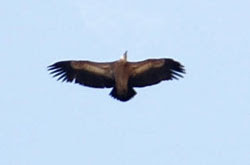
We saw many vultures and ravens flying over the top of the mountain and they were enormous and the ravens were extremely noisy, although I took many photos only 1 turned out well, where you can see the head, body and distinguish the colour of the feathers, I need to keep trying with this digital photography!

Campillos Village, Andalucia

With less than 8000 residents, Campillos lies between the Costa del Sol, Granada and Sevilla. Campillos is an important area of Andalucia for cattle farming, leather production and the mining centre since Roman times. Campillos is situated on the N342 which continues on towards Olvera, Arcos de la Frontera, Jerez de la Frontera and is also well connected to the nearby La Fuente de la Piedra - home to the brilliant pink flamingos.

Iglesia Parroquial Nuestra Señora del Reposo is the most important monument in Campillos, situated off the town's plaza central.

Ermita de San Benito is the town's patron saint and is worth seeing. Built between 1578-1569 originally the Ermita looms over the town centre. Extensive work was carried out in 1756 and 1814.

A good time to visit Campillos to celebrate the patron San Benito would be July 10-11th every year. Their summer feria happens in the first two weeks of August, yearly.

If gastronomy delights is all part and parcel of your travelling bug then Campillos is famous for it's drying soup or stew with tuna, eggs and ham, known as Porra Campillera. The regional speciality is Salmoreja, consisting of oranges, fried fish, cod and tuna.

Thursday, 18 September 2008

It's been a long summer!

Well first of all I would like to apologise to our members and viewers for my lack of hard work since July! I have not blogged for some time because life just got a little hectic, work load was heavy, it was far too hot outside and I just couldn't get enough done, I was very lax in the garden - again too damn hot!

I did, however, manage to keep everything alive, just! I had irrigation on twice a day for 20 minutes at a time and then I was watering even more, my strawberries stopped producing fruit very early because I think they were feeling the same way, in fact we have new fruits growing now the sun has eased off now.

Refugio de Juanar, Monda
We went for a walk in the woods on Saturday afternoon, Refugio de Juanar is a national park in Monda and literally 10 minutes drive from our front door, I have been banging on about going there for a mooch about since we moved here and finally the fella gave in and off we went. With bird book in hand and back pack on, we ventured into the woods.

Refugio de Juanar lies in the middle of a nature reserve, 800 metres above sea level, with the forests showing off their pine, eucalyptus and olive plantations, through this forest is various tracks leading you off into the wilderness and a Mirador that looks over Marbella which is truly stunning.

Refugio de Juanar is a rustic and grand hotel that is built on the site of an old hunting lodge, that once belonged to the Marqueses de Larios family who are well known in the city of Malaga.

Famous guests of Refugio de Juanar have included Charles de Gaulle, who in 1970 finished writing his memoirs here and Alfonso XIII, for whom the hotel was one of his favourite retreats. The hotel has space for 56 guests, offers a wide range of gastronmy delights, speciality dishes include marinated pheasant, wuail, mountain goat, Sergovia style suckling pig, lamb and roast kid, along with an array of international dishes.

A visit to this delightful hotel in Monda is the perfect occasion to rediscover the joys of outdoor living. The surrounding forest, with its well-marked paths and fresh air by the lung full, is a paradise for trekkers and nature lovers alike.

Unfortunately we did not see the wildlife we were hoping to come across, the only bird we did see was a Chaffinch and although he was a pleasant little chappy and very colourful, I was ever hopeful of seeing one of many resident Griffon Vultures!

Birds of Refugio de Juanar:
Tits
Warblers
Hawfinch
Thekla Lark
Woodlark
Robin
Black Redstart
Rock Bunting
Hoopoe
Black-eared Wheater
Woodchat Strike
Skylark
Meadow Pipit
ChiffChaff
Linnet
Great Grey Shrike
Stonechat
Sardinian
Dartford Warblers
Whinchat
Owls
Great Blue
Coal
Chaffinch
Serin
Goldfinch
Greenfinch
Jay
Great Spotted Woodpecker (heard but never saw)
Short-toed Treecreeper
Firecrests
Crossbills
Rock Thrush
Bonelli's Eagle
Buzzard
Peregrine
Kestrel
Booted Eagle
Short-toed Eagles
Griffon Vulture
Egyptian Vulture
Crag Martins
Alpine Swift
Swallow
House Martin

When to Visit Refugio de Juanar?
The area is very popular at weekends and on national bank holidays, I would advise avoiding these buy times as the Spanish can be known for being rather noisy and this could prove frustrating if you are wanting to see some wildlife. The highest part of this site is 900 metres above sea level so it is advisable to take some form of warmer clothing, in case it is a little chilly.

Refugio de Juanar Hotel
Refugio de Juanar email
Telephone: 952 881 001
Fax: 952 881 001

Birdwatching Book